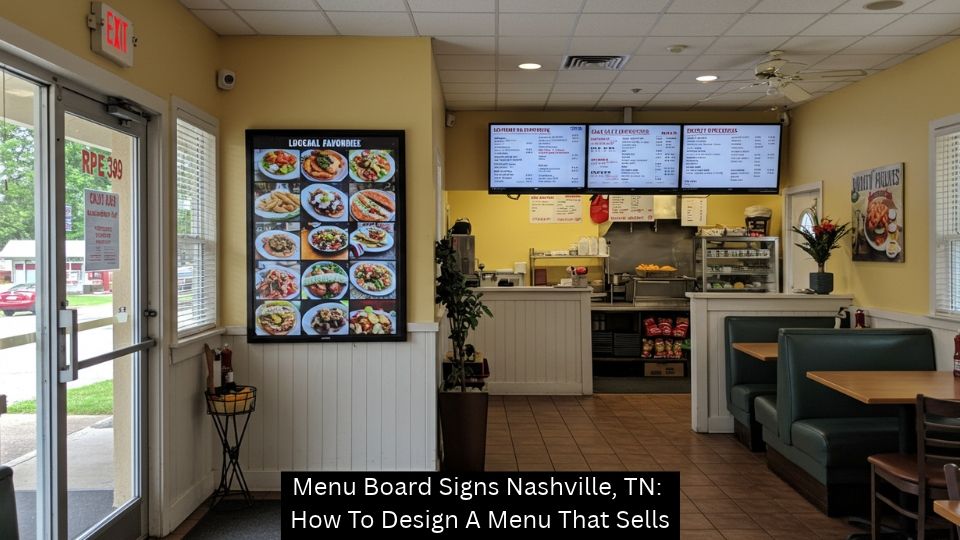
Menu Board Signs Nashville, TN: How To Design A Menu That Sells
A menu board does more than list prices; it’s a sales tool that guides customers toward the items you most want them to order. In a fast-paced restaurant or quick-service setting, customers often decide what they want in under fifteen seconds, which means layout, contrast, and hierarchy matter just as much as the food itself. For Nashville’s growing restaurant scene, a well-designed menu board can lift average ticket size without changing a single recipe.
Start With Visual Hierarchy
Not every item on your menu deserves equal visual weight. Customers scan boards the way they scan a webpage, in loose patterns that favor certain zones over others.
Featuring High-Margin Items
Placing your most profitable dishes in the top-left or center of the board, where eyes naturally land first, increases the odds they get ordered without any extra prompting from staff.
Grouping Logic That Makes Sense
Organizing by category, whether that’s appetizers, mains, or combos, helps customers move through decisions faster instead of hunting across a cluttered board.
Choose The Right Format For Your Space
Menu boards come in more formats than most business owners expect, and the right choice depends on how often prices and items change.
Static Printed Panels
Durable and cost-effective, static panels work well for menus that don’t change often and need a clean, permanent look.
Digital Menu Boards
Digital displays allow real-time updates for daily specials, pricing changes, or seasonal items, which is valuable for businesses that rotate their offerings frequently.
Backlit And Illuminated Boards
Illumination keeps a menu board readable in dim interiors or during evening hours, and it adds a polished, modern feel to the ordering area.
Design Details That Actually Move Orders
Font size, color contrast, and photography quality all influence how quickly and confidently a customer orders. Low-contrast text or crowded layouts slow the line down and frustrate both customers and staff.
Keep Consistency With Your Brand
A menu board should feel like an extension of your restaurant’s overall identity, using the same color palette, fonts, and tone as your storefront and packaging, not a separate design exercise.
FAQ
What Size Should A Menu Board Be For A Small Restaurant?
Size depends on viewing distance and item count, but most quick-service boards range from 2 to 6 feet wide to stay readable without overwhelming the space.
Are Digital Menu Boards Worth The Investment?
For businesses that update pricing or specials often, digital boards typically pay for themselves through reduced reprinting costs and faster updates.
How Often Should A Printed Menu Board Be Redesigned?
Most businesses refresh printed boards every one to two years or sooner if pricing or the menu itself changes significantly.
Can Menu Boards Be Illuminated For Evening Visibility?
Yes, backlit or edge-lit panels are common and help keep menus fully readable in lower interior lighting.
Does Menu Board Design Actually Affect Sales?
Yes, layout, hierarchy, and photography have all been shown to influence which items customers choose and how quickly they decide.
A menu board is one of the few pieces of signage that directly touches your bottom line every single day. Getting the hierarchy, format, and design details right turns it from a simple price list into a quiet sales tool. Nashville Signature Signs designs and builds menu board signs for Nashville restaurants that want their menu working as hard as their kitchen. Contact us today to create a menu board that showcases your offerings and helps drive sales.