Monument Signs: The First Impression Your Business Can’t Afford To Skip
Before a customer ever reaches your front door, they’ve already formed an opinion of your business from the curb. A monument sign is often that first handshake, standing at ground level near the street where it catches attention from cars, sidewalks, and shared parking lots. Unlike a wall sign mounted high on a building, a monument sign sits at eye level with the people driving by, which makes it one of the highest-value pieces of signage a property owner can invest in.
What Makes A Monument Sign Different
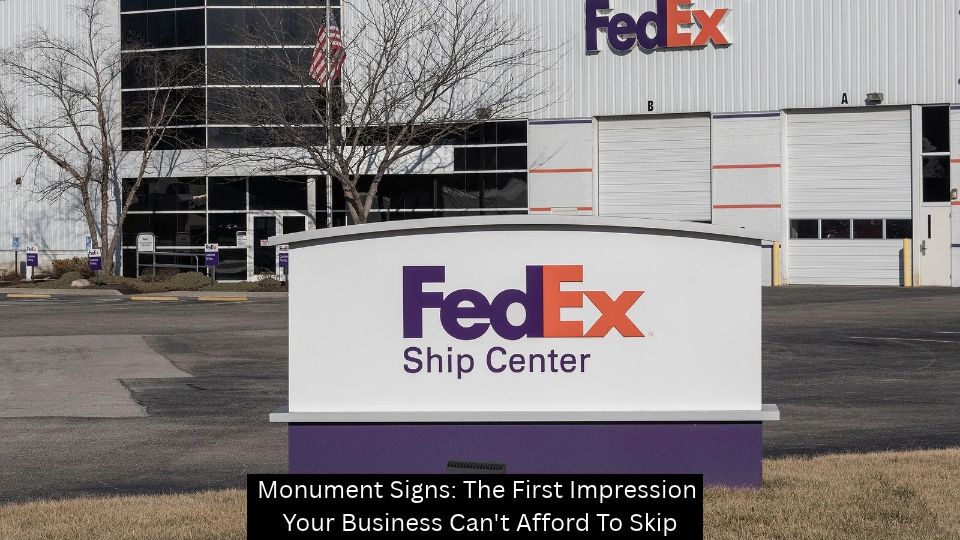
A monument sign is a freestanding structure, typically built from a base of brick, stone, stucco, or metal, with the business name and logo mounted on or embedded into the face. It’s engineered to stand on its own, which means foundation work and structural planning are part of the build from the start.
Single-Tenant VS. Multi-Tenant Faces
A single business gets one clean face to work with, while a shared property might need a tiered layout listing several tenants. The design challenge shifts depending on how many names need to fit without the sign feeling cluttered.
Lit VS. Unlit Options
Internally lit cabinets keep the sign visible after dark, while externally lit or unlit stone monuments lean into a more upscale, architectural look. The choice usually comes down to visibility needs versus the aesthetic of the property.
Why Placement And Sizing Matter So Much
A monument sign that’s too small or set too far back from the road loses most of its value. Sightlines, speed limits, and the distance drivers have to react all factor into how large the lettering needs to be and where the sign should sit on the lot.
Reading Distance At Driving Speed
A driver going 35 mph has only a few seconds to spot, read, and react to a sign. That reality drives letter height and contrast decisions far more than personal design preference does.
Landscaping And Sightline Conflicts
Trees, parking structures, and even a property’s own landscaping can block a monument sign that looked perfectly placed on paper. A site visit before finalizing placement catches these conflicts early.
Designing For Longevity
Because monument signs are a bigger investment than most other sign types, materials and finish choices should account for years of weather exposure. Powder-coated metal, UV-stable acrylic faces, and properly sealed masonry all hold up far better than cheaper alternatives over a Tennessee summer and winter cycle.
FAQ
How Much Does A Monument Sign Typically Cost?
Costs vary widely based on size, materials, and lighting, generally ranging from the high four figures into the tens of thousands once foundation and electrical work are included.
Do Monument Signs Require A Permit?
Yes, in nearly every case, since they’re freestanding structures tied to local zoning and setback rules that vary by property location.
Can A Monument Sign Be Updated Later For A New Tenant?
Many monument signs are designed with removable panels specifically so tenant names can be swapped without rebuilding the entire structure.
How Long Does It Take To Install A Monument Sign?
Between permitting, fabrication, and foundation work, most projects take several weeks, though simpler unlit designs can move faster.
What’s The Best Lighting Option For A Monument Sign Near A Busy Road?
Internally illuminated cabinets or halo-lit dimensional letters typically perform best for nighttime visibility on high-traffic roads.
Bringing It Home
A monument sign is one of the few marketing investments that works around the clock without ever needing a new campaign. Getting the size, placement, and materials right the first time is what separates a sign that fades into the landscape from one that pulls customers in. Nashville Signature Signs designs and installs monument signs built to make that first impression count.